

Activision has provided DETONATED with NEW information about Call of Duty Skill Based Matchmaking, and just how it works for Multiplayer. Multiple studios came together to debunk a number of claims surrounding Call of Duty SBMM, and to explain what factors determine what lobby a player gets put into. Prior to the launch of Season 1, Activision confirmed new information would be shared about SBMM in the future. Here’s everything DETONATED learned about SBMM and what changes may be in store for the future:
HOW SBMM REALLY WORKS
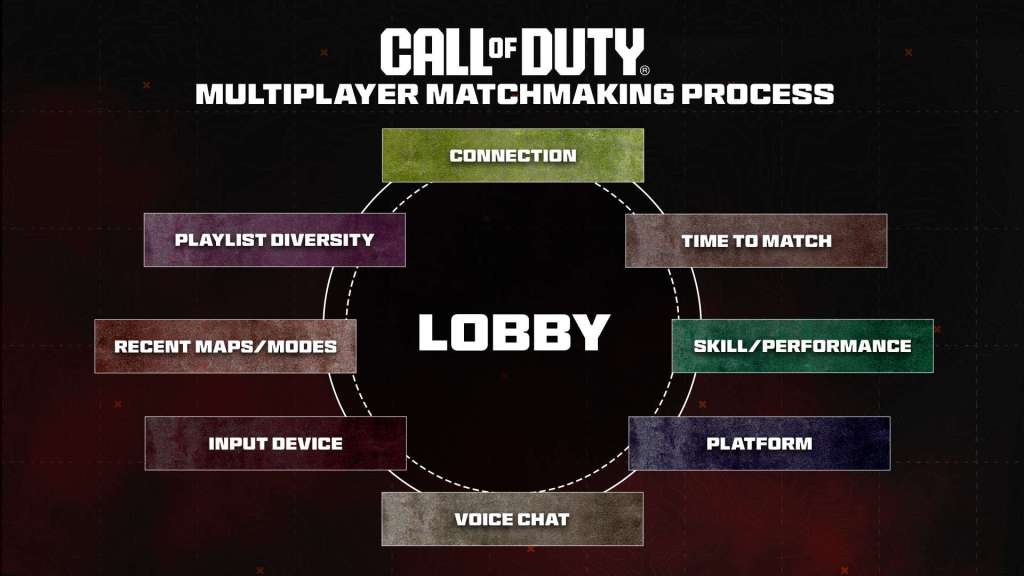
As confirmed by Activision, what’s referred to as Skill Based Matchmaking is broken down by a number of factors which create the lobbies we see in Multiplayer. It’s been said that information about Warzone and Ranked Play matchmaking will be shared in the future. Here is how Skill Based Matchmaking is broken down:
- CONNECTION – As the community will attest, Ping is King. Connection is the most critical and heavily weighted factor in the matchmaking process.
- TIME TO MATCH – This factor is the second most critical to the matchmaking process. We all want to spend time playing the game rather than waiting for matches to start.
- PLAYLIST DIVERSITY – The number of playlists available for players to choose from.
- RECENT MAPS/MODES – Considering maps you have recently played on as well as your mode preferences, editable in Quick Play settings.
- SKILL/PERFORMANCE– This is used to give our players – a global community with a wide skill range – the opportunity to have an impact in every match.
- INPUT DEVICE – Controller or mouse and keyboard.
- PLATFORM – The device (PC, Console) that you are playing on.
- VOICE CHAT – Enabled or disabled.
The game data Activision has suggests that a healthier playerbase is maintained when the above factors are kept enabled. Various studios are working to test matchmaking further to account for frustrated players who claim they’re constantly put in sweaty lobbies.
In addition, Activision’s technology team is working on a “Ping and Matchmaking White Paper” for folks interested in learning more about how SBMM truly works. More details will be revealed in the future.
DEBUNKING CONTROVERSIAL SBMM CLAIMS
Today’s Call of Duty blog provided a QNA covering some of the community’s top questions about Skill Based Matchmaking. Here is every question that was answered:
Does Call of Duty consider player engagement (time played) as a factor in matchmaking?
We do not consider how often, or how much, you play when determining matchmaking.
Does the Call of Duty matchmaking process impact any in-game elements such as hit registration, player visibility, aim assist, damage, etc.?
No. Our matchmaking process does not impact gameplay elements.
Does spending money on Call of Duty content (such as bundles, Battle Pass, or BlackCell) change how players are matched?
Money spent does not in any way, shape or form, factor into matchmaking.
Does Call of Duty use bots in Multiplayer matchmaking?
Call of Duty Multiplayer does not use bots as part of the general matchmaking process. If this changes in the future, we will inform the community.
Do partners or content creators get special consideration in general matchmaking?
No. We do not change the matchmaking process based on who owns the account. In specific cases, such as for events like Call of Duty Next, we may be required to customize how lobbies are formed; however, these events usually take place in private matches and do not impact general matchmaking.
Have you ever considered an opt-in/opt-out system for the matchmaking algorithm?
Our data suggests that splitting the player base with an opt-in / opt-out matchmaking system will have negative consequences on the overall player pool. That means, potentially, longer wait times based on the type of matchmaking selected (plus add into that playlist, map and mode history, platform, and more) and matches with poor connections.
Have you ever tested removing skill as a consideration from matchmaking?
We have run tests over the years to determine if removing skill as a consideration from matchmaking makes sense. We will continue to launch these tests periodically. To date, the data remains consistent with what we detailed above – players tend to quit matches or stop playing if they’re getting blown out, resulting in a negative overall experience for all players in the lobby and the general player population. We purposefully do not disclose when these tests occur because it may impact feedback or the data we see during these tests.
Have you considered removing skill from matchmaking in specific general multiplayer game modes?
We have considered this in the past and we will continue to examine if this idea makes sense as part of an experimental playlist or in specific modes. We have nothing to announce on that front today
WILL SBMM CHANGE IN THE FUTURE?
As far as future updates go for matchamaking, it doesn’t look like Call of Duty intends to change very much with how players stack up against others. It’s likely they’ll alter how often lobbies disband, but it’s clear that low skill players continuously back out of lobbies when they’re on the losing end, meaning SBMM keeps them engaged.
Higher skilled players statistically continue playing the game even when they’re performing bad, meaning there isn’t a drop off like there is with lower skilled players. The effects of SBMM don’t seem to be affecting the higher skilled players in Multiplayer.
As casuals account for the higher percentage of the playerbase, it’s unlikely Activision will altar the matchamaking which is only ensures healthy player retention. Lower skill players will continue to influence the matchmaking system, so long as their lobby behavior remains the same.

Special thanks to Activision for providing DETONATED with exclusive details on Call of Duty Matchmaking! For a video breakdown, checkout the following link:

Stay connected with any new updates on MW3 and Warzone as they release on our Twitter, and our YouTube Channel!